
Musk Has Been Running Tesla Blind
And he is doing it on purpose.

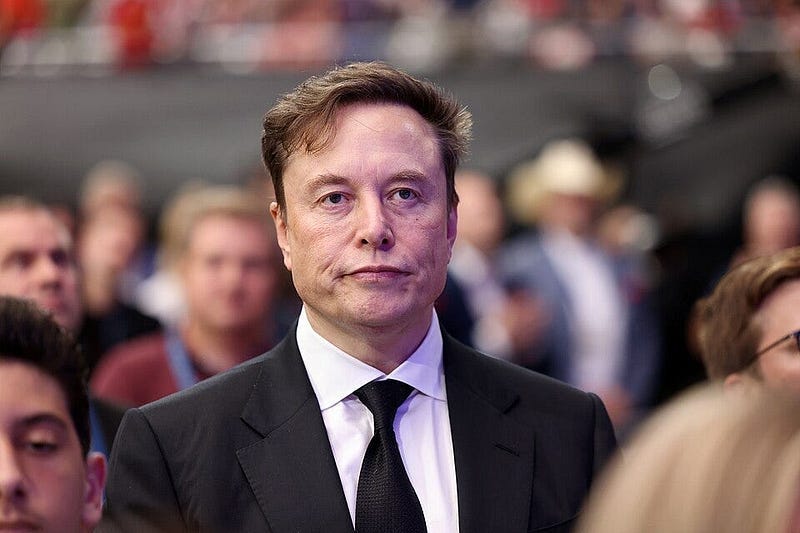

We all know that Musk can’t get enough of automation. From Optimus to self-driving cars, Musk wants to let his robots take over. But, as it turns out, Musk has been doing a similar thing with his role as Tesla CEO, except rather than replacing himself with AI, he has pulled more of a “Jesus take the wheel” move. You see, the Washington Post recently published an interview with one of Musk’s old Tesla executives, who let slip that Musk wanted to spend as little time working with Tesla as possible. That might sound innocuous, but to anyone who understands business management and business culture, that is horrific. It means Musk is effectively asleep at the wheel and allowing Tesla to drive itself off a cliff. But this is not an accident. When you look at this in the context of what Tesla has become, it makes complete sense and, in my opinion, proves that Musk is doing this on purpose.
The Interview
Let’s start with this Washington Post interview with Jon McNeill, who was Tesla’s president of global sales, delivery and service for three years. In the interview, McNeill stated that “when I asked [Musk] what success looked like, he said, ‘Success is getting me down to one day a week at Tesla so I can get back to my first love, which is rockets.’” This wasn’t a one-time claim. McNeill alleged this was Musk’s main motive throughout his time at Tesla, from 2015 to 2018. That is in stark contrast to the hilariously hollow workaholic mythos Musk has built up around himself in recent years.
His attitude likely hasn’t changed either. Recently, angry shareholders demanded that Musk spend more time at Tesla, and Musk has threatened to walk from Tesla multiple times. So, it is safe to assume that this one-day-a-week goal is still very much relevant.
This revelation alone destroys much of the cult-like mythos Musk has created. But it has far deeper implications when you take the reality of Tesla into context.
Tesla’s Micro Reality
Tesla is on a historic downward spiral and shows no signs of letting up.
In a previous article, I covered how Tesla’s annual profit fell 46% in 2025 compared to 2024, with its Q4 2025 profits down an astronomical 61% compared to Q4 2024. In fact, regulatory emissions credits accounted for $542 million of Tesla’s $840 million profit in Q4 2025; however, this revenue stream has now functionally collapsed for Tesla (read more here). The only “good” news was that between 2024 and 2025, Tesla’s energy storage revenue increased by 26.5%. At the time, I predicted that this growth would end soon, given that far better products were entering the market. And it turns out I was right! Recent reporting found that in Q1 2026, Tesla’s energy storage installations totalled just 8.8 GWh, an astonishing 39% short of its 14.4 GWh goal, meaning installations actually shrank 15% year-over-year. On top of that, it found that Tesla failed to meet its already low vehicle deliveries projection by 4%, heavily suggesting that the catastrophic sales slump has continued.
So yeah, Tesla isn’t doing so well! Its core business, where it generates the vast majority of its revenue and profit, is collapsing. Why? You could point to the understandable backlash to Musk’s disastrous political actions. But there is a reasonable argument that, in fact, this has been caused by Musk taking Tesla in a totally different direction and him functionally betting the entire company on this hard pivot.
Tesla’s Macro Reality
This is the broader picture of Tesla. Musk is turning Tesla from an EV pioneer into a “leader” in humanoid robots and robotaxis. I have covered this topic before, but at Musk’s behest, Tesla has effectively dropped all its EV development projects to focus entirely on the self-driving Cybercab and the robot Optimus. Because of this, Tesla’s ailing EV business cannot be recovered, and the robot and robotaxi ventures are the only viable route to sustainability or growth. In effect, Musk has bet the entire future of Tesla on these projects paying off.
Even if the underlying technology and concepts are solid, this pivot is a gargantuan, highly risky bet that explains much of the granular downward spiral we are seeing with Tesla. But here is the thing: Tesla executives and insiders have known that the concepts and technology underlying this shift are non-starters.
Optimus
Take Chris Walti, the original lead on the Optimus robot project. In a previous article, I covered how Walti has publicly stated that humanoid robots simply don’t make sense and that the humanoid form factor isn’t “a useful form factor.” Walti shares the same view as other robotics experts, such as Brad Porter (former VP of Robotics at Amazon), Gartneranalysis and Ken Goldberg (UC Berkeley roboticist), that the human form factor is highly inefficient. For example, why ask an expensive, slow and difficult-to-set-up general-purpose humanoid robot to use a vacuum when you could use a cheaper and more reliable specialised robot like a Roomba to complete the same task? As such, Walti likely saw Tesla’s Optimus as more of a tech demonstrator than an actual useful product.
Walti would have almost certainly fed his opinion back to Musk. He would have also likely fed back the fact that Optimus is far, far behind the competition from China and Boston Dynamics. Yet Musk has totally ignored Walti and proceeded to make selling millions of Optimus robots integral to Tesla’s future. Indeed, Musk’s ridiculous $1 trillion pay packet includes a condition that Musk must sell a million robots.
Robotaxi
The same is true of Tesla’s Robotaxi. In a previous article, I covered how Rohan Patel, Tesla’s former head of business development and policy, warned Musk that the Robotaxi wouldn’t make any profit and that Tesla should instead focus on more affordable EVs.
We know this because Patel’s internal analysis of Musk’s Robotaxi plans leaked. This analysis found that even if Tesla could get its FSD-powered Robotaxis to work, they wouldn’t make any profit for years to come. Patel concluded that the venture was a dead end and advised Musk against investing heavily in it. Instead, he recommended focusing on developing cheaper, mass-market EVs, such as the proposed Model 2, and keeping Tesla at the forefront of the EV niche.
But again, Musk ignored Patel, scrapped the Model 2, and shifted much of Tesla’s R&D to the Cybercab and Robotaxi projects. Unfortunately, Tesla’s Robotaxi service is so small it is laughable and is certainly not a profit-maker for Tesla, which it won’t be for an awfully long time (read more here). Meanwhile, the Renault 5, which offers basically the same specs and price as the promised Model 2, is now one of the best-selling EVs, proving that Patel was right (read more here).
But remember that Patel’s analysis assumed that the technology powering the Robotaxi, Tesla’s FSD (Full Self-Driving), actually works. And here is the really inconvenient thing: it doesn’t, because, again, Musk ignored and overruled his own experts.
FSD
In yet another previous article, I covered how Musk overruled Tesla engineers and, in the process, kneecapped FSD.
Ultimately, Musk believes that because we humans navigate with vision alone, an AI can do the same. This has caused him to remove all the sensors from Teslas and make them “vision-only” systems. Therefore, the self-driving AI only has a few camera feeds to understand the world around it.
Tesla engineers rightly warned Musk that this is a horrific idea because it leaves the system with no redundancy. When conditions inevitably render the camera feeds useless, the AI can’t see or interpret its environment correctly. Likewise, AI computer vision can’t be 100% accurate, so when it inevitably reads the road wrong, there is nothing in place to catch that error. This method effectively puts all your eggs in an AI basket that has already been proven unreliable. Meanwhile, the industry-standard approach of having an entire suite of different sensors, like lidar, radar and ultrasonic sensors, allows separate systems to check and verify against each other, enabling potentially fatal errors to be caught.
Tesla engineers cautioned Musk that switching to a visual-only system would be problematic and unsafe. But again, Musk ignored them and forced the entire Tesla fleet to switch to vision-only.
The engineers were so concerned about the safety implications of this decision that they whistleblew to the Washington Post. The report interviewed nearly a dozen former employees, test drivers, safety officials, and other experts, who all reported an increase in crashes, near-misses, and other embarrassing mistakes by Tesla vehicles once they switched to vision-only. The report even found that Musk rushed the release of FSD (Full Self-Driving) before it was ready and launched it despite the software not being safe for public road use. In fact, a former test operator went on record saying that the company is “nowhere close” to having a finished product.
Even now, five years later, Tesla’s FSD is still far from being safely autonomous. According to FSD Tracker, which uses customer-reported journeys using FSD to calculate the rate of critical disengagement and disengagement rates per mile, the very latest version of FSD has a critical disengagement rate (where the driver must intervene to stop a crash) of once every 2,035 miles on average. For some context, Waymo’s average distance between critical disengagements is more like 17,000 miles. Even worse, when operating on city streets, as a robotaxi does, FSD’s average distance between critical disengagements is just 867 miles. That means that a fully autonomous Tesla Robotaxi, with no human oversight, would crash roughly once a week if let loose on the street today.
Again, Musk ignored critical feedback, and now Tesla is in a significantly worse position because of his ignorance.
How?
When I covered these previous stories, I believed Musk was just an egotistical idiot. Truth be told, he still is. But the revelation of this new Washington Post interview enabled me to answer the “how” and “why” behind these horrific missteps.
If Musk only spends a single day a week at Tesla, that doesn’t give his executives enough time to provide him with proper feedback. It only gives time for Musk to come in, bleat some orders, and then disappear. I cannot stress how important proper feedback is at this level of business. Not only is it critical in making sure different parts of the company function properly together, but it is also essential to creating a culture of responsibility, which is necessary to ensure detrimental actors and decisions are identified and rooted out. Yet Musk decided to reduce his time at Tesla so much that this feedback quite simply isn’t possible, which will have fostered a deep culture of no responsibility.
So, McNeill’s interview shows us the mechanism behind how all these monumental f**k-ups have occurred.
But why has Musk done this?
Why?
Musk doesn’t get paid based on Tesla’s business performance. Even his giant pay packets aren’t contingent on meaningful metrics, like profit. No, Musk gets paid based on Tesla’s stock price. Musk has made billions of dollars through selling Tesla shares and using Tesla shares as collateral for loans. So, if Musk wants to get paid, he doesn’t need to improve Tesla’s business performance — he needs to pump up the stock price.
Once upon a time, those two things were one and the same. But not anymore.
Tesla is one of the most overvalued stocks in the world. Its price has more to do with speculation than material reality. Indeed, you could argue that his cult of personality influences the company’s stock price more than any realistic future earnings. This hyper-speculation has driven Tesla’s share price so far from reality that the two are now functionally separate.
In other words, if Musk wants a big payday, all he needs to do is make some wild claims, pump the hype, and watch the stock tick steadily upwards. At this point, improving Tesla’s actual business doesn’t even move the stock needle.
Inconveniently for him, wild claims like this get dragged down by feedback loops and executives holding each other accountable. Take the Robotaxi. If Musk actually followed Patel’s feedback and took responsibility for how unrealistic his plans were, then Musk couldn’t pump speculation that Tesla’s Robotaxis would take over the world and so couldn’t increase the speculative value of Tesla. Musk needs to break feedback loops and systems of responsibility to push this speculative hype.
It is my opinion that Musk’s lack of time at Tesla was purposefully designed to do exactly this. Musk doesn’t care about Tesla’s reality; it doesn’t affect him if the business itself is in a downward spiral. All he cares about is the speculative value. So, by spending as little time as possible at Tesla, he can still dictate the wider direction Tesla is heading, allowing him to pump speculation while removing any form of feedback or responsibility, which obfuscates the reality of the situation.
Shouldn’t He Be Ousted?
Any other CEO would be ousted for this behaviour. Gutting a company like this is the job of private equity firms, not the CEO, after all. So, why hasn’t Musk been kicked out for decimating Tesla’s core business?
There are two main ways to oust a CEO: being voted out by the board or being voted out by the shareholders.
Musk was once chair of Tesla’s board but has since been forced out by the SEC. However, that isn’t much of a problem, as Musk used his significant influence to jam Tesla’s board, and he pays them more than any other tech company to keep them loyal. They aren’t going to vote him out any time soon.
The same is true of Tesla shareholders. Without Musk’s speculation, Tesla is worth significantly less than its current value. I have previously estimated that if Tesla were valued in line with other tech-forward automakers, it would lose around 90% of its value. Even Tesla bulls are willing to admit that much of what they invested in is Musk and not Tesla. In a previous article, I covered how Tesla bull Gary Black publicly stated that if Musk stepped down, Tesla’s stock could fall by 20% to 25%, wiping out nearly $220 billion in shareholder value. He wasn’t alone in this statement, with hordes of other major investors echoing his sentiment. On top of all of that, Musk owns roughly 20% of Tesla shares! So, to get a majority vote to oust Musk, you would need to get more than 62.5% of the other shares to vote in a way that will utterly tank the company’s value.
In a way, Musk has effectively blackmailed the only people who can hold him accountable. All so he can gut Tesla, exclusively prioritise its speculative value, ignore critical feedback, and avoid even the slightest hint of accountability.
Summary
This is why the implications of McNeill’s interview go much deeper than most people are making out. It heavily implies that Musk is purposely piloting the company blindfolded. He is asleep at the wheel, pandering to an echo chamber of a stock market that laps up his sci-fi bullshit and pushes his grandiose delusions to dangerous heights. There is just one problem with this plan. Speculation doesn’t last forever. Eventually, reality will come back to bite him, and when it does, Musk and Tesla will feel its teeth. The question is when reality will take a mouthful of Musk and Tesla — not if.
Thanks for reading! Everything expressed in this article is my opinion, and should not be taken as financial advice or accusations. Don’t forget to check out my YouTube channel for more from me, or Subscribe. Oh, and don’t forget to hit the share button below to get the word out!