
You Don't Understand Just How Big Of A Leap Starship V3 Needs To Be
Time is running out.

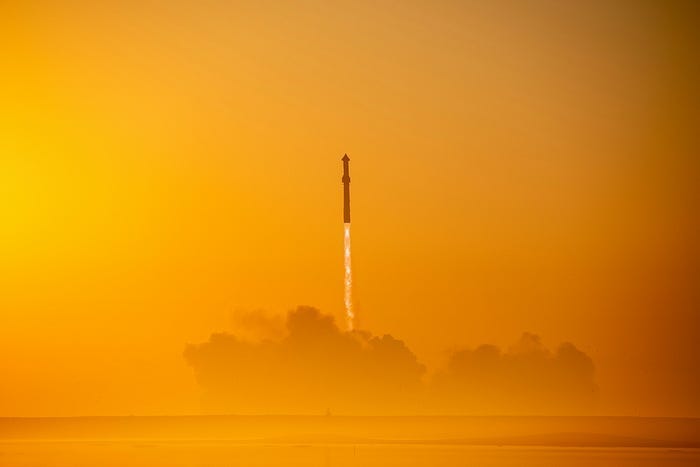
Did you know Starship was meant to land on the Moon two years ago? Yet here we are in 2026, and Starship has not even reached orbit. This rocket is so far behind, it’s beyond a joke. With SpaceX’s IPO rapidly approaching and NASA’s crewed Artemis III mission (which requires Starship) just on the horizon, SpaceX desperately needs to take a monumental leap forward. Well, that is what Starship V3 (version 3) is expected to deliver, and Musk recently announced that the first fully V3 Starship will launch in May. So, the big question is: what does V3 need to accomplish, and by when, to get this car crash of a program back on track?
The Goal Posts
Let’s start with what the actual goal is and how Starship needs to operate to achieve it. Considering how much cash NASA has poured into Starship, Artemis III is arguably Starship’s biggest objective. This mission is supposed to use the Human Landing System variant of Starship to shuttle crew between lunar orbit and the lunar surface. The mission was originally slated to happen last year, but because Starship is so far behind, it has been significantly delayed to late 2028. Indeed, NASA’s Watchdog is now concerned that Starship development is progressing so slowly that this mission will be even further delayed.
So, what does Starship have to do to fulfil this mission?
Well, the crew of Artemis III will take off on board a NASA SLS rocket and travel to lunar orbit in a NASA Orion spacecraft, where they will rendezvous with HLS and use it as a lunar lander shuttle. The HLS is essentially just a modified Starship upper stage, so SpaceX has to be able to launch a Starship upper stage, plus all the HLS gubbins and fuel, to the Moon in two years’ time.
But Starship can’t go straight to the Moon; it needs refuelling in orbit first. The current idea is that a “tanker” variant of the Starship upper stage will be placed in Low Earth Orbit (LEO). It will be refuelled by multiple Starship launches, which will dock with the tanker and transfer their cryogenic propellant into the tanker before coming back down. Once the tanker is full, the HLS will launch, dock with the tanker, fully refuel, and then head to the Moon.
Now, here is the thing: NASA wants SpaceX to demonstrate all of this, as well as lunar landing and ascent with an uncrewed mission, before they conduct a crewed Artemis III mission using HLS.
For some context, the outgoing Starship V2 never made orbit and only ever carried 16 tons, or 16% of its promised payload, on a “successful” suborbital flight. Because it never made orbit, it never even attempted orbital refuelling. It also never successfully landed its upper stage.
So, what needs to be changed in Starship V3 to make it suitable for Artemis III?
Increased Payload to Orbit
Let’s start with the main factor: increasing the payload. As I mentioned previously, the V2 Starship only ever carried 16 tons on suborbital flights, but SpaceX claims it can carry 35 tons to LEO, which might be a bit of an exaggeration, to say the least. Either way, it falls severely short of the promised 100+ ton payload to LEO that is required to make this orbital refuelling shenanigans possible.
Firstly, it needs to successfully reach orbit with a payload, which might be more challenging than you think. The extra fuel required to take Starship to LEO is roughly 20 tonnes (as calculated by Thunderf00t), which suggests that Starship V2 can reach only the lowest possible orbit if it carries no payload!
So, how is Musk solving this horrific problem?
Well, I covered this topic before. The V3 has been fitted with SpaceX’s new Raptor 3 engines. By removing heat shielding and instead using more ablative cooling (which is when cryogenic fuel is used to cool the engine before it is burned), the Raptor 3 is 105 kg lighter than the previous Raptor 2, saving over four tonnes of weight per rocket. The Raptor 3 has also increased its power, delivering 9% more overall thrust. Additionally, the V3 Booster has 12% more propellant than the V2, and the V3 upper stage has 6% more. To accommodate this, the V3 is noticeably longer than the V2, yet its dry mass is reported to be a huge 20% to 30% lower than the V2’s, or 100 tonnes less.
This should increase the payload of Starship, but is it enough to go from a 16 ton payload on a suborbital flight to 100 tons to orbit? I very much doubt it.
There is also the issue of reliability. The Starship V2 upper stage failures were the result of engine flash events (caused by premature propellant ignition, which methods like ablative cooling can induce) and lack of structural integrity. So, increasing the rocket engines’ power, removing the rocket engine heat shields, making the rockets carry far more propellant mass, and transforming the rocket structure to be larger, yet lighter, could very well dramatically increase the risk of catastrophic failure. There is no point in increasing orbital payload if the chances of actually getting to orbit are minimal.
Starship V3 needs to prove that these changes can not only increase payload capacity by over 600% to 100 tons, but that it can achieve this feat reliably. I cannot exaggerate enough how gargantuan a task that is from Starship V2’s currently horrifically low baseline.
Refuelling
Starship V3 has so little time to test and prove it is capable of orbital refuelling that it basically has to do it straight out of the gate. This creates four major challenges.
Firstly, Starship has to prove it can safely remain in LEO for extended periods. This region is incredibly crowded, full of satellites like Starlink and the ISS, as well as a great deal of space debris, so it will need to constantly and actively avoid potential and catastrophically expensive impacts. This might sound trivial, but the “tanker” variant will be one of the largest and by far the heaviest object in LEO, making it incredibly arduous to manoeuvre. SpaceX needs to prove there is functionally zero risk of Starship becoming an LEO bulldozer before they can receive permission to park there for months or years.
Secondly, docking. Starship V2 wasn’t exactly controllable when in space, with the upper stage losing control multiple times during Flight 8 and Flight 9. Yet, to accomplish orbital refuelling, two 70-metre-long Starships, with a total mass of over 3,000 tons, will have to successfully dock with each other in LEO. Orbital docking of such large vehicles has never been attempted before, because it is insanely difficult! It will require pinpoint accurate control, and even then, the forces involved will be colossal. Not to mention the docking systems need to be strong enough to secure these massive bodies together and not fail. Furthermore, Starship needs to be able to pull this off with almost 100% reliability, as a mishap docking with a near-full tanker Starship could cause a horrifically expensive mission-ending explosion.
So, once V3 reaches orbit, it needs to prove it has totally reliable and near-perfect levels of in-orbit control.
Thirdly, there is the issue of actually transferring the propellant (fuel).
For its propellant, Starship uses pressurised cryogenic liquid oxygen and methane. These kinds of fuels are highly challenging to handle. Their freezing cold temperatures apply thermal pressure on components, as they unevenly contract with the drop in temperature, making leaks and total failures far more likely. Likewise, their high-pressure and extremely volatile nature means even a small leak will turn into a devastating explosion. In fact, as I covered in a previous article, handling these fuels is so risky that a Starship exploded while being refuelled down here on Earth! I even roughly calculated that if orbital refuelling has the same explosion rate as the current terrestrial refuelling, a Starship mission to Mars or the Moon has an 82.6% chance of ending in a giant fiery explosion during orbital refuelling.
In other words, Starship V3 not only has to prove it can handle orbital cryogenic refuelling but also that it can handle it with basically zero risk of explosive failure.
This is especially true when you look at the fourth major issue. Most outlets claim that the “tanker” variant of Starship will need refuelling ten times before it can fully refuel a Moon- or Mars-bound Starship. But that isn’t true, because boil-off exists.
Again, I covered this topic in a previous article, but even in space, the warmth of the sun will heat up this cryogenic propellant and cause it to boil-off. The rate of this boil-off could vary from 0.5% to 5% per day in orbit, and this alone could dramatically increase the number of refuelling launches required to get a Starship out of LEO.
For example, in my previous article, I was very generous and assumed a 1% per day boil-off rate, a 100-ton propellant refuel per flight (assuming Starship reaches 100-ton LEO payload), and a refuel flight rate of once per week. With all of those estimates combined, how long do you reckon it would take for the orbital tanker to accumulate the 1,600 tons needed to fully refuel a Starship?
Well, after 110 refuelling missions, which will take more than two years at this refuelling rate, it hits an impassable equilibrium of 1,428 tons of fuel, or 89% capacity. At this point, the tanker is losing 100 tons per week to boil-off, meaning the weekly refuelling flights are simply stemming the losses.
Oh, and I estimate that a realistic cost for a reusable Starship launch is $70 million. That would put the price of a Starship lunar mission launch at $7.7 billion, or nearly four times the cost of an equivalent NASA SLS lunar launch.
Even a tiny amount of boil-off dramatically increases the cost and time required to send a Starship to the Moon. Because each refuelling mission will create a risk of mission-ending tanker explosion, boil-off also dramatically increases the risk of the mission flat-out failing.
So, to be able to conduct the Artemis III mission in late 2028, V3 needs to launch and begin refuelling its orbital tanker by the end of this year. That means that over the next nine months, V3 has to reach orbit, achieve its promised 100-ton payload to LEO, test and demonstrate near-perfect reliability in orbital refuelling, reduce orbital boil-off rates to 1% per day or lower, and increase its launch rate from its current once every two months to once a week. But don’t forget, NASA wants a demo beforehand, so really, SpaceX needs to send a tanker to orbit and refuel it months before this, as well as reaching a launch rate of twice per week to get a demo lunar mission tanker and an Artemis III tanker ready.
That is a monumental leap forward that Starship has to take in just a few months.
Upper Stage Reusability
For this colossal expansion of Starship launch frequency to even be financially possible, the V3 has to crack upper-stage reusability. As I have covered before, a Starship upper stage likely costs well over $100 million to build. So if SpaceX can’t figure out reusability, launch costs will more than double!
For some context, my $70 million-per-launch estimate assumes that a Starship upper and lower section has a lifespan of 33 launches with minimal maintenance. That might not sound that bad, considering a Falcon 9 booster has a lifespan of up to 34 flights, and while it still needs serious refurbishment between flights, they have lowered the reflight time to as little as nine days! Not only that, but SpaceX has conducted soft splashdowns with the upper stage. So, surely they are close to reuse?
Unfortunately, relaunching a booster and an upper stage are very different things. The upper stage of Starship has to reach orbit speeds, and this extreme velocity means that during landing, it has 72 times more kinetic energy to scrub off than the booster! Air friction dissipates a large portion of this energy into the giant heat shield of the upper stage.
And even worse, it doesn’t look like SpaceX has a heat shield for Starship that is capable of surviving this heat and being reusable. Thunderf00t posted a great video analysing a fragment of a Starship heat shield tile, and its old-school material choice and janky construction seem to be optimised to be replaced each flight rather than being suitable for multiple flights. Considering how large and expensive such a heat shield is, that is not a suitable alternative. Indeed, there is speculation that these heat shield tiles aren’t actually good enough and that the inside of Starship is getting excessively hot during landing, which could damage structural integrity and systems, causing it to require extensive refurbishment before reflight can be attempted.
V3 has to demonstrate that SpaceX can successfully land and rapidly reflight a Starship upper stage. That means a heat shield that adequately protects internal systems and structures from thermal damage while being robust enough to survive multiple launches without major maintenance. However, as Thunderf00t points out in his video, science hasn’t yet produced a material capable of this that doesn’t incur a colossal weight penalty (which Starship can’t afford to carry). So, really, V3 has to pull a rabbit out of the hat here.
In Time
Again, Artemis III is slated to launch in late 2028. Even optimistic assumptions about Starship’s payload and boil-off rates mean SpaceX has to put two tanker versions of Starship in LEO and launch two refuelling missions a week by the end of this year to meet that deadline. Consequently, for Artemis III to happen on time, Starship V3 needs to finally reach orbit, increase payload by over 600%, improve launch safety, figure out orbital docking between two Starships, resolve the orbital cryogenic fuel transfer problem, improve the safety of orbital cryogenic fuel transfer, make the entire rocket fully reusable, and scale up launch frequency from once every other month to twice a week (or, in other words, increase launch rate by 1,700%).
Can SpaceX do all of this in time?
Personally, I don’t think so. At most, I think the V3 will be slightly less of a failure than Starship V2. But that is my opinion, and I’m just some guy on the internet. The real question is, do you think SpaceX can do this?
Thanks for reading! Everything expressed in this article is my opinion, and should not be taken as financial advice or accusations. Don’t forget to check out my YouTubechannel for more from me, or Subscribe. Oh, and don’t forget to hit the share button below to get the word out!
No way. The amount of handwaving-refuel needed is gargantuan. SpaceX isn't all Musk, but it might as well be. Even in good rocket outfits, errors happen and problems come up. Management interferes. Bad decisions get made ( Hello O-rings! ). And that's with competent, happy, and capable employees. The folks doing all this work at SpaceX may be completely competent, but this is space. Not the imaginary world of Elon Musk where FSD works, new Tesla models get introduced, ground-based new tech battery packs get created, thermal roof tiles get installed, FSD works (yeah, I know I added it twice.. it's that far behind ), cyber trucks get pretty and sell well, lots of Starships don't blow up on the ground, Telsa freight trucks get shipped, FSD, Roadsters happen, Optimus happens, Grok happens, and space based data centers happen x 100??? Right. I know I risk anti-Musk ranting, but this isn't even the full failure list. This is the real world. A place where things find a way to explode, sometimes with people in them. Where stuff that has never been done needs actual PROOF, not PR that says "No problem. We'll fail often and fast." They have done that part well, but the point is to NOT fail eventually. It's not to put fragmentation tankers in LEO. This stuff is serious. The CONSEQUENCES of failure are larger than money spilled on the ground. And NUMBER of chances being taken are HUGE. The compounded PROBABILITY of failure is LARGE. And it's being promoted by a gent whose hobby is making success noises about his failure realities. Wanna bet the farm on that? Unwise... to be kind.. Oh, and FSD.
What is wrong with NASA? They just successfully sent four astronauts around the moon without Musk’s Starship and they want to wait on this complex plan of refueling, etc., from a company best known for exploding rockets? Here’s a comparison: I ordered the hybrid Jeep XE because I thought it combined post-family-minivan vibe with EV “responsibility.” Then the lithium batteries started catching fire. I went through one “repair,” but when the same issue prompted another recall, I traded that loser in for a good old reliable Honda. Why aren’t the geniuses at NASA as capable of walking away from a bad decision as I am?