
Was The SpaceX IPO A Success?
It isn't a simple yes-or-no question.

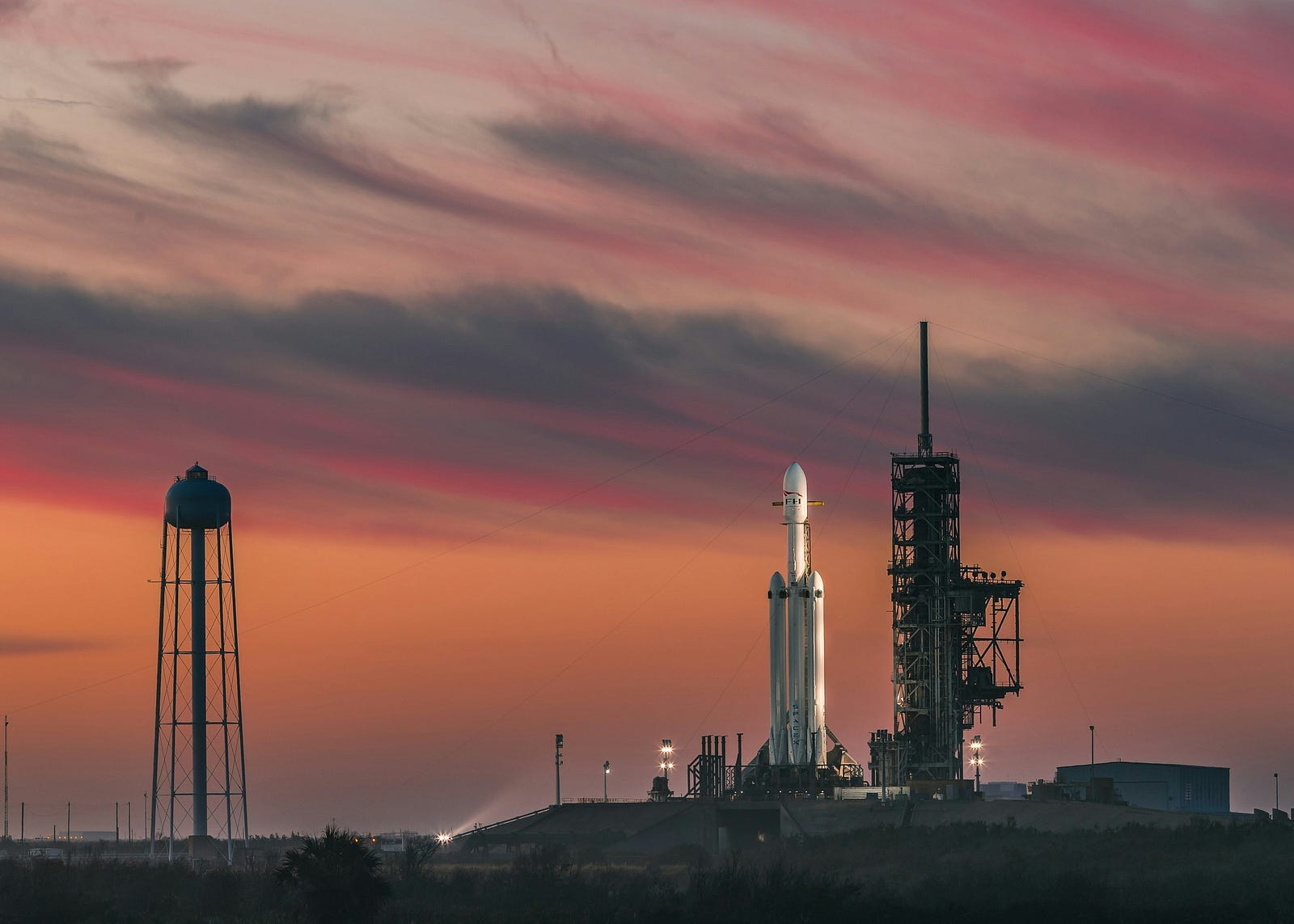
SpaceX’s IPO was always going to be a wild, erratic and chaotic ride. That is why I have waited so long to comment on it. Due to the obviously BS nature of SpaceX’s business plan and the rigged way the IPO was launched, it was anyone’s guess as to what would happen. . You might think that because Elon Musk is now comfortably the most grotesquely greedy man alive — sorry, I mean, the world’s first trillionaire — that this IPO was a success. After all, the pathetic man got the hollow title he desperately craved so that he could feel something. But now, a few weeks down the line, we can see that this IPO is actually quite a mixed bag.
So, let’s start with a positive point. It was a success because SpaceX managed to sell its shares at a $1.77 trillion valuation, raising just over $85 billion, which is $10 billion more than they targeted. That makes this by far the largest IPO in history. The fact that they were able to pull this off is objectively impressive — particularly when you realise that many analysts claimed SpaceX was worth half of this colossal figure.
But this IPO was heavily engineered. SpaceX only floated 5% of its stock, with 70% of that reserved for retail investors, and many brokers heavily reduced the barrier to entry to buy the IPO. That means the supply was greatly restricted and demand skyrocketed because a lot of non-professional investors were suddenly able to buy it. So, while it is impressive that this IPO went well at all, a sizeable chunk of its success is thanks to this manipulation, not necessarily SpaceX itself.
Okay, but what is an IPO actually for? Well, to raise cheap funds for the company to grow rapidly. Indeed, the general notion is that this mountain of cash will be used to finally get Starship working (which it won’t, read more here) and to put a ton of AI data centre satellites in space (which will never be economically viable or scalable, read more here).
Unfortunately, to meet these goals, $85 billion is nowhere near enough. As Cape Fear Advisors points out, SpaceX faces around $235 billion in spending commitments through to 2030. On top of that, SpaceX was going to use its IPO to pay down an extremely expensive $20 billion loan (which SpaceX inherited from xAI and X), meaning that only $65 billion from this IPO would go to these spending commitments over the next three and a half years. That is just 27.6% of what they need! But, in reality, the financial situation is likely even worse. Cape Fear Advisors did a fantastic job going to primary sources to figure out SpaceX’s actual spending commitments for things like Terrafab (because they were omitted in the S-1). However, the costs associated with developing Starship and orbital AI data centres, and then deploying them at scale, don’t have such solid sources, and SpaceX has a history of massively underplaying said costs. I, and many others, think these costs could be enormous. As such, Cape Fear Advisors’ figure could be seen as a solid minimum spend commitment, as there is the possibility it could be noticeably larger.
Either way, over the next few years, SpaceX will have to raise hundreds of billions of dollars more in cash, or its main value proposition will fail.
