
Tesla's Robotaxis Are Going Nowhere
This looks a bit suspicious…

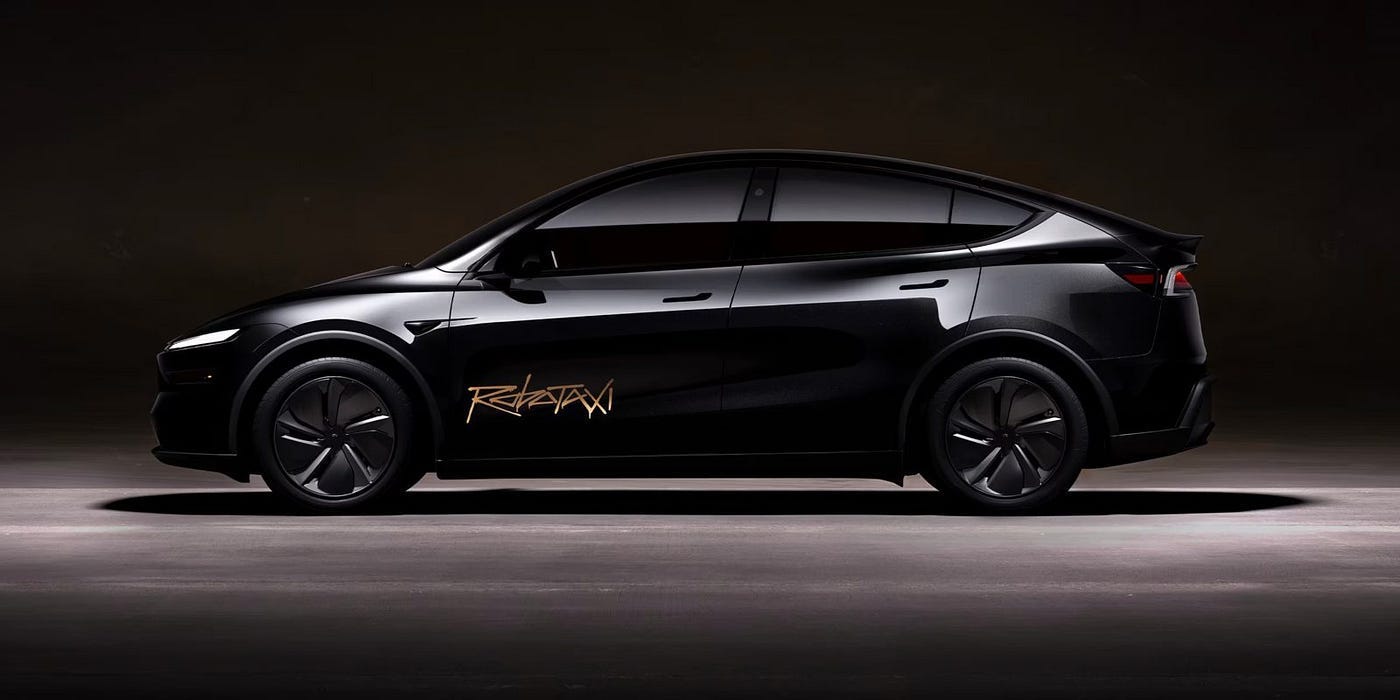
The memification of Musk’s constant failure to deliver even a fraction of his self-driving promises has spiralled from funny to downright painful. I am convinced that this is what broke the public’s golden-boy perception of Musk more than anything else, and I’m including that ‘wave to the crowd’ moment. Musk’s questionable politics were tolerated for years until everyone realised he is full of s**t. But, somehow, these ‘untruths’ are getting worse, and I think I might know why.
For a while now, Musk has been saying that Tesla robotaxis are imminently coming to California, as soon as regulators give them permission. Back in October 2025, Musk said that robotaxis would be available in California “in a few months” and that they were “waiting on regulatory approval in California.” However, Reuters recently found that Tesla logged zero miles of autonomous test-driving on California roads in 2025. In fact, this marks the sixth year in a row Tesla has failed to clock any autonomous test miles in the state since getting a permit to do so.
Why does this matter? Because it indicates that regulators are waiting on Tesla, not the other way around, as Musk insinuates.
Tesla currently holds an ‘entry-level’ California DMV permit, allowing it to test autonomous vehicles on California roads with a safety driver in the driver’s seat. But, to even apply for a permit to test fully autonomous robotaxis, Tesla needs to log 50,000 miles of autonomous driving on public roads in California with a safety driver. Once it has obtained this next permit, it needs to undergo even more testing before being allowed to offer autonomous ride-hailing to the public.
However, that is likely an unrealistic minimum, as Reuters pointed out, Waymo logged 13 million miles of testing hours before it launched its driverless taxi service in California. Considering Waymo has historically been far safer than Tesla’s Robotaxi (read more here), it is fairly safe to assume Tesla will likely need to log even more testing with the California DMV to prove its safe enough to get a similar permit.
So, why hasn’t Tesla started logging these miles?
After all, it could take Tesla an awfully long time to do so. Their current Californian test permit doesn’t allow them to offer supervised robotaxis service to the public, as they are currently doing in Austin, Texas, and limits them to offering rides only to employees or select individuals. That puts a serious bottleneck on how quickly Tesla can log these miles, and potentially makes logging them much more expensive.
However, even in Texas, Tesla isn’t logging all that many miles. According to Electrek, from June 2025 to mid-January 2026, Tesla’s Austin robotaxis have logged 800,000 miles, or equivalent to 40,000 logged hours (assuming an average speed of 20 mph). At that rate (6,666 logged hours per month), it would take Tesla 162 and a half years to log as many supervised autonomous test hours as Waymo did in California before launching their driverless service.
But, I can think of several reasons why Tesla hasn’t started logging miles in California yet, and they all revolve around Tesla’s Robotaxi’s crash rate.
You see, over those 800,000 miles, Tesla’s Austin robotaxis logged 14 crashes with the NHTSA. In other words, even with a supervisor, Tesla robotaxis crash on average once every 57,000 miles. To put that into perspective, Tesla itself estimates that the average American has a minor collision every 229,000 miles. That means Tesla’s robotaxis crash at a rate four times that of a human driver, even when there is someone in the car to correct its mistakes, so the actual crash rate if these robotaxis were allowed to operate autonomously would likely be far higher.
That could make logging these 50,000 miles not just a futile Sisyphean task, but also deeply damaging to Tesla’s narrative.
Let me explain.
Tesla’s robotaxi crash rate is horrific. For some context, Waymo got its full commercial licence to offer driverless robotaxi services in California in early 2024. In 2024, Waymo cumulatively logged 114 million miles driven and reported 462 accidents to the NHTSA, for an average of 1 accident every 247,000 miles. In other words, just after Waymo received its driverless permit, it operated at a crash rate more than four times lower than Tesla currently posts with a safety driver! But, it is worse than that. In 2024, Waymo had a disengagement rate (how often a safety driver takes control, or the system aborts, to avoid an accident) of once every 9,793 miles. For comparison, on the FSD tracker(which collects user-reported Tesla FSD data, making it likely a cherry-picked and too optimistic source of data), the latest and greatest system from Tesla had a disengagement rate of once every 1,029 miles, or nearly ten times worse than Waymo had more than a year ago!
If you want to know why Tesla’s self-driving tech is so far behind Waymo, read my previous article here.
All of this suggests the bar to pass safety requirements to offer driverless ride-hailing services in California is far, far higher than Tesla is currently at. As such, logging test miles might be pointless for Tesla, as it will only prove to regulators that they aren’t safe enough to advance to the next-level permit.
But, Tesla doesn’t just have to log 50,000 test miles in California; it also has to report a crash, with detailed context, within 10 days of an incident, and detailed disengagement data annually over these test miles. Moreover, the California DMV posts this data and the reports to public databases!
So, not only would logging test miles in California likely not get them closer to obtaining a commercial autonomous taxi licence, but it would also risk exposing the gargantuan shortcomings of Tesla’s autonomous technology. That could be a major threat to Tesla’s stock price, as the notion that it is a leader in autonomous technology is the only thing keeping its stock price so ludicrously high.
Compare this to Texas, where Tesla can easily obtain a permit to run a small autonomous ride-hailing service with safety drivers with no requirement to report incidents to the Texas DMV. So, they can make it ‘look like’ they are on par with Waymo, all while obfuscating their shortcomings. In fact, the only body Tesla has to report incidents in Texas to is the NHTSA, and there they can redact details about it, hiding how bad or how responsible Tesla’s technology is.
Oh, and those rumours of driverless Tesla robotaxis in Austin? They seem to be non-existent. So, that doesn’t change anything.
I suspect that Tesla isn’t logging testing miles in California because they know they aren’t safe enough to get the next-level permit, and to keep the true incident rate of their robotaxi under wraps to protect the myth that is holding Tesla stock prices so high. I just wonder how long Tesla can keep this charade up, and how long investors are willing to ignore reality.
Thanks for reading! Everything expressed in this article is my opinion, and should not be taken as financial advice or accusations. Don’t forget to check out my YouTubechannel for more from me, or Subscribe. Oh, and don’t forget to hit the share button below to get the word out!