
SpaceX Scrubs 2026 Starship Mars Mission
Because even by Musk's own numbers, they can't get there.

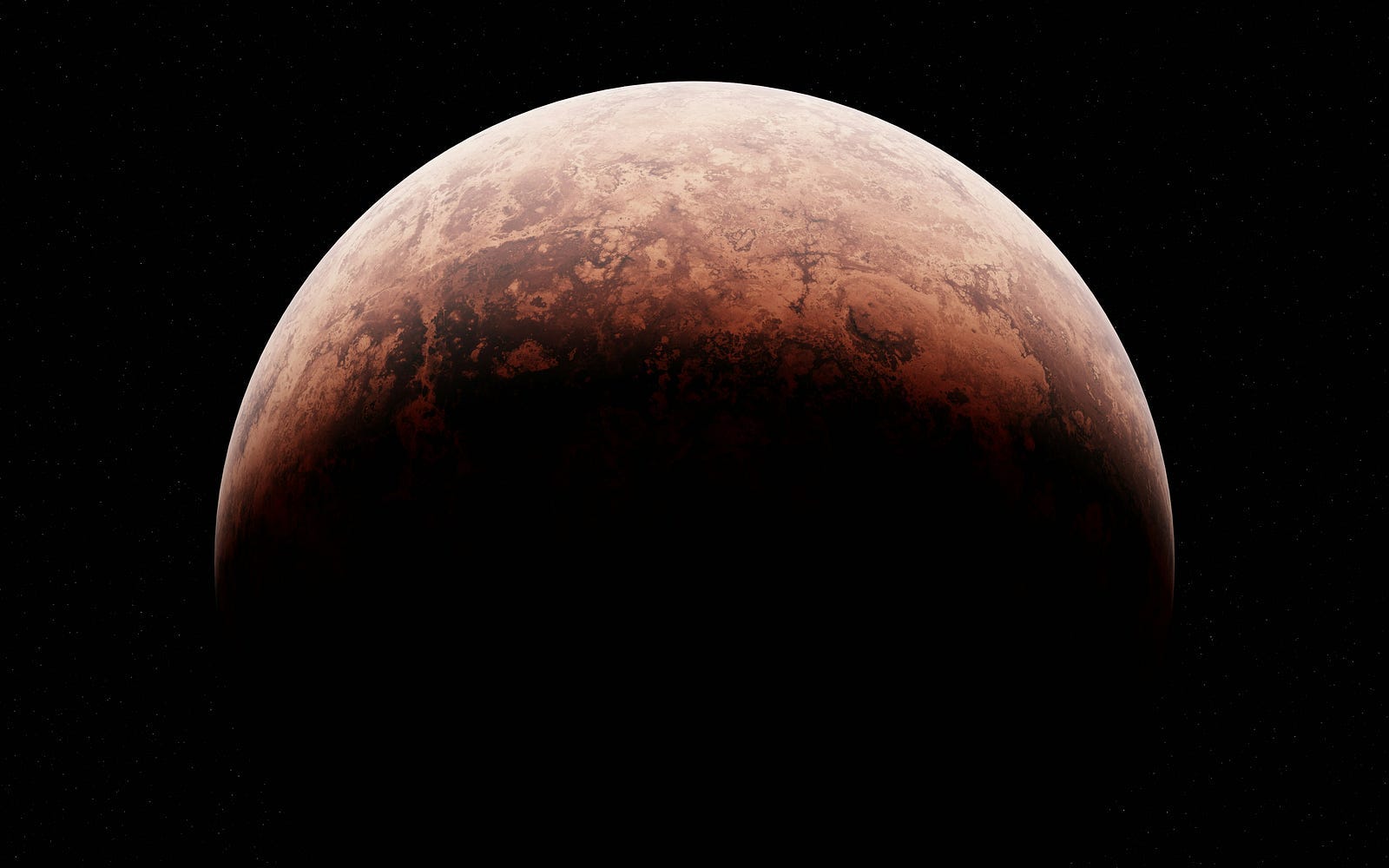
If you haven’t realised that Musk doesn’t understand a thing and is a grifting moron, who has only made it so far because he is constantly saved by a vast army of overworked, underpaid engineers, and a fanatical cult of brainwashed investors, then you might need to get your eyes checked out. He is constantly making wild, totally unfounded, inflammatory claims, which he has to walk back when they inevitably never materialise. And would you guess it, Musk has done this yet again! Despite claiming for years that this was the year SpaceX would finally launch its uncrewed Starship mission to Mars, Musk has quietly axed the mission. The reason why is nothing short of utterly damning.
We Are Going To Mars! Eventually…
Now, to be clear, Starship is already FAR behind schedule. Musk first claimed Starship would land on Mars by 2022. When Starship hadn’t even launched, let alone reached Mars by 2022, Musk clarified that Starship would now launch for Mars in the next planetary alignment window (when Earth and Mars are close enough for a spacecraft to transfer from one to the other) in 2024. When 2024 rolled around, and Starship couldn’t even launch without exploding into bits, he pushed this down the road yet again to the next alignment window in late 2026. So, it is already more than 4 years late!
But, in August 2025, Musk claimed they were going to get five “Mars-ready” Gen 3 Starships built and sent to the red planet by the end of 2026. The Italian Space Agency even contracted SpaceX to take their experiments to the Martian surface on this mission. Musk did clarify that there was only a “slight chance” that this mission would happen in late 2026. But it seemed, at the very least, that SpaceX was trying to make this happen!
However, then, the inevitable walk back happened. In a tech bro podcast recently published, but recorded in late December, Musk said that the 2026 Mars mission was “a distraction,” and that SpaceX will not pursue it. With how SpaceX operates, this is functionally confirmation that the 2026 mission has been scrapped.
Yet another flagship promise from Musk down the toilet.
But why? Why can’t Starship get to Mars?
Well, it is actually physically impossible for Starship to get to Mars, even if Starship somehow reaches Musk’s preposterous claims, all because of the moronic operational design of Starship. Let me explain.
Gen 3
A starship can’t just go to Mars in one shot. The upper stage, the part that is meant to land on Mars, burns around 90% of its fuel just getting into Low Earth Orbit (LEO), meaning there isn’t enough left in the tank to get to higher orbits, let alone Mars. So Musk’s genius idea is to have other Starships refuel it in orbit, and give it enough oomph to reach the red planet and land on it.
This idiotic idea is why Starship can’t reach Mars.
Musk has claimed the upcoming Gen 3 Starship will have a 100-ton payload to LEO. Though that doesn’t mean much. He also claimed Gen 1 and Gen 2 would, but Gen 1 had zero payload capacity, and Gen 2 was optimistically rated at just 35 tons to LEO. So, needless to say, I doubt Gen 3 will have a 100-ton payload. But let’s be incredibly generous to Musk and assume it will, and that it will reach the slated launch rate of ten per year. So, how long will it take to refuel a Gen 3 Mars-bound Starship?
A Gen 3 Starship upper stage has a fuel capacity of 1,600 tonnes. Therefore, once in orbit, it will need to be refuelled with 1,440 tons of fuel. With a 100 ton payload, it would take a Gen 3 15 refuelling missions to do this, which at a rate of ten launches per year would take 18 months.
In other words, if Musk wanted to send a single Gen 3 Starship to Mars during the 2026 transfer window, he needed to have launched it back in August and have refuelled it three times by now. But Musk didn’t launch this Starship back then; instead, he was loudly and baselessly claiming he would send seven Starships to Mars in 2026.
But the earliest Gen 3 was ever going to launch was early 2026. So, Musk will have known that the earliest Gen 3 could make its way to Mars is the next transfer window in 2029.
Well, actually, that isn’t true at all, thanks to the insane risks of refuelling and boil-off.
Boil Off
Starship’s liquid propellant only stays liquid if it is kept insanely cold; hence why it is called cryogenic fuel. In orbit, Starship will be exposed to the raw, unfiltered Sun and an insane amount of heat transfer, so even with extensive insulation and cooling systems, this propellant will heat up and boil, which in turn will increase the pressure of the fuel tanks. So, this gaseous propellant is vented out into space to keep the pressure at safe levels. This is known as boil-off, and it means that Starship’s fuel tanks effectively have a built-in leak.
Estimates of how fast Starship will lose propellant to boil-off vary from 0.5% to 5% per day. But let’s be super generous and assume it will be just 1% per day.
Doesn’t sound like much, right? Well, it is enough to stop a Gen 3 Starship with even Musk’s claimed specifications from ever fully refuelling in orbit.
Let’s assume eventually SpaceX can manage one 100-ton refuelling launch per month. With a 1% propellant boil-off per day, the orbiting Starship will lose 26% of its propellant between these monthly refuels. So, how many launches and how long will it take to refuel the orbiting Starship?
The answer is, it will never be refuelled. After 14 months and the same number of refuelling missions, it reaches equilibrium at just 380 tons of propellant, or 24% fuel capacity. At this point, it is losing 100 tons of propellant to boil off each month, so all the refuelling missions are doing is stemming the loss. Sadly, 24% fuel capacity isn’t nearly enough to get Starship out of Earth orbit, let alone to Mars.
Okay, but SpaceX is, apparently, going to dramatically increase the number of Starship launches it can do; maybe that will solve this problem?
Well… no.
Even if you increase the refuelling mission rate to once every week, it can never be fully refuelled. After 110 refuelling missions, which will take more than two years at this refuelling rate, it hits an impassable equilibrium of 1,428 tons of fuel, or 89% capacity.
Now, that might be enough to go to Mars with a heavily reduced payload of a few tens of tonnes, but considering Starship already has a greatly reduced payload, it also very well might not be enough to even get to Mars with zero payload.
Okay, so there is a chance this could get to Mars? Well, not really. Let’s not forget the insane scope of this.
Firstly, it is highly doubtful that SpaceX will ever increase Starship’s launch rate to this kind of level, despite Musk’s wild claims. There isn’t the commercial demand to pay for such expansion, let alone the huge practical and legal issues of launching so many rockets. But even if, somehow, they do reach this scale, I highly doubt SpaceX can afford for such a huge chunk of their launch capacity to go into a single, unpaid mission.
Especially when you consider the colossal cost and risk it will entail.
A fully reusable Starship launch realistically costs $70 million per pop (read more here). So, this single mission, with a total of 111 launches, will cost $7.77 billion to, at best, take a drastically reduced payload of maybe a few tens of tons to Mars.
That is, if it doesn’t explode before it ever leaves Earth orbit.
Orbital refuelling is not just far harder than you might think, but insensibly risky. Thanks to the brutal conditions of space, and the insane volatility of the cryogenic methane and oxygen fuels Starship uses, the likelihood of a catastrophic explosion happening during refuelling is high. This is why every previous space mission has avoided refuelling of any type like the plague.
Every orbital refuelling mission is the equivalent of playing Russian roulette, as there is a serious risk that it will explode, destroying the Mars-bound Starship. And somehow, we have to take these chances 110 times without catching the metaphorical bullet even once. This puts incredible pressure on SpaceX to make orbital refuelling as safe as possible.
In fact, if the chance of a mission-ending explosion during orbital refuelling exceeds 0.006%, then the chances of our Mars-bound Starship exploding in Earth orbit during one of these 110 refuelling missions are greater than its chances of surviving them all and making it to Mars.
Now, Starship and its booster have been refuelled roughly 66 times down here on terra firma (11 flights, 2 stages, each refuelled 3 times), and they have experienced 2 catastrophic refuelling failures. So, the current risk of a Starship experiencing a mission-ending refuelling failure on Earth is roughly 3%.
So, how is SpaceX going to make refuelling in orbit, which is exponentially harder and riskier than doing it down here, more than 500 times safer? Because that is what they are going to have to do to ensure Starship has just a 50% chance of making it to Mars, rather than exploding in Earth Orbit.
For comparison, NASA’s SLS is on track to be able to deliver 40 tons to the Martian surface. It does this in a single launch, meaning you don’t have to wait years for it to refuel, and the risk of mission failure is incredibly low. It also means it only costs just over $2 billion. So, for a third of the cost of a Starship Mars mission, the SLS will take basically the same payload there in far less time and far, far less risk because it doesn’t require years to refuel.
Not even Musk is brain-dead enough to choose the Gen 3 Starship over the SLS.
Can Starship Get To Mars?
The big question isn’t when Starship can get to Mars, but rather whether it will ever be able to?
Even if we give Musk all the grace in the world and believe his wild, unfounded claims, it still looks like Starship can’t get to Mars.
This baked-in requirement for orbital refuelling is a death sentence to any Starship trying to break past Earth orbit. And, because this fault is so fundamental to Starship, this isn’t something that can be solved with iterative improvements. It requires a totally new approach and design. But, do you think Musk’s ego will ever let him admit that? No, he is locked into this downward spiral.
So, it is no surprise that Musk scrubbed the Starship 2026 Mars mission, as it was never going to happen anyway. But it also shouldn’t be a surprise if they never even attempt a Mars mission.
Thanks for reading! Don’t forget to check out my YouTube channel for more from me, or Subscribe. Oh, and don’t forget to hit the share button below to get the word out!
Sources: Space.com, Market Watch, Reuters, Space.com, WEBDAA, Boeing, Will Lockett, Will Lockett, Will Lockett, Will Lockett
Great Report. Thanks Very Much. Jeff Nordhaus
Is it able to use whatever is leftover in the tank after reaching LEO for refueling in addition to the payload?