
A Day of Reckoning Is Coming For Tesla
And a rejuvenated 'Model 2' won't stop that.

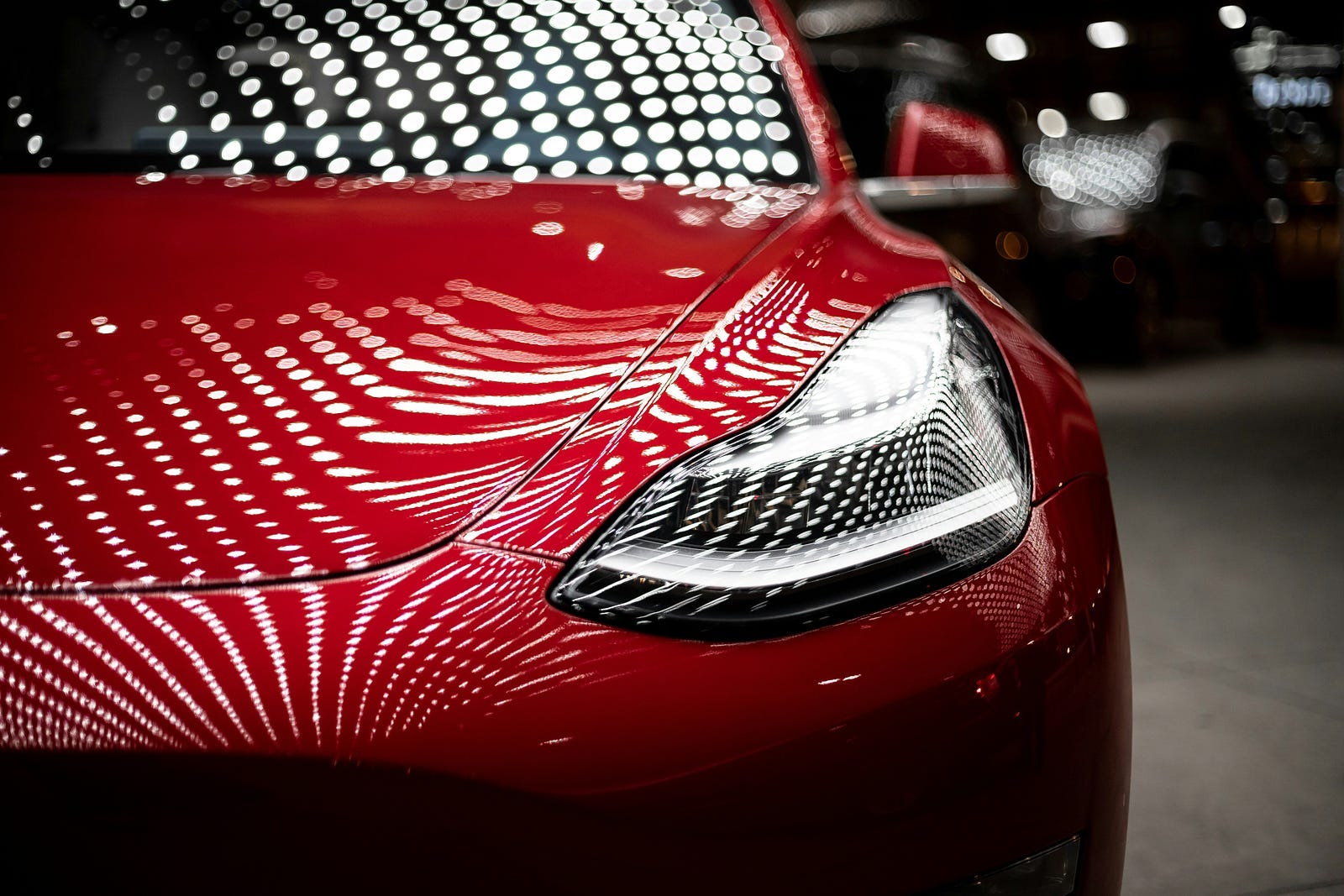
An upcoming $25,000 EV, dubbed the ‘Model 2’, was once one of the main justifications for Tesla’s ludicrous speculative value. Musk announced this model in 2020, with it slated to launch in 2023. Then, 2023 rolled around, and rather than launching the Model 2, Musk announced Tesla had one in the works, which he expected to launch in 2025 and predicted would sell well over a million units a year. Investors were practically drooling at the idea of Tesla gaining such a monopolistic chunk of the car market, which catapulted Tesla’s value. But less than a year later, in 2024, Musk scrapped the Model 2 and redirected all development funds toward Tesla’s limp robotaxi and robot projects. Now, two years later, reports are circulating that Tesla is trying to bring the dead-and-buried Model 2 back to life. You could rightly see this decision as yet another example of inept flip-flopping from an out-of-touch billionaire CEO with far too much unchecked power. But in light of Tesla’s rapidly downward-spiralling financial health, the abject failure of Tesla’s Robotaxis, and institutional investors’ sudden realisation that reality exists, this revived Model 2 looks more like a futile, impotent, and desperate attempt to avoid the imminent death blow coming for Tesla. Let me explain.
The Leak
How do we know that Tesla is trying to revive the Model 2? Well, outlets like Reuters have reported that anonymous sources working with companies in Tesla’s supply chain claim Tesla is developing a new small EV that isn’t based on the Model 3 or Y. The scant details that we know so far about this car is that it will be smaller than a Model Y at 4.3 m long, it will be built in China, be a “wide margin” less expensive than the Model 3, and that Tesla has not yet greenlit this new EV for production. That’s about it.
Compare that to the ‘old’ Model 2, which was slated to be less than 4 m long, have a base price of $25,000, and be produced in Mexico. That means this new, smaller EV might not even pick up where the old Model 2 project left off.
This is also a remarkable U-turn for Musk. Back in 2024, against the advice of almost every executive (read more here), he cancelled the ‘old’ Model 2, calling affordable EVs “silly” and “pointless”, and claimed that autonomous robotaxis would soon replace vehicle ownership for the majority of people on the affordable end of the market.
So, why backtrack? And why now?
Why This Makes Sense
In simple terms, Tesla isn’t exactly doing well right now, given that every plan Musk has proposed is failing, and the Model 2 might be the only thing that can help soften the blow of these failures.
Tesla’s global sales dropped by 8% in 2025 compared to 2024 to 1.64 million vehicles, and recent sales figures suggest that trend is only intensifying. On top of that, one of Tesla’s main sources of income, emissions credits, is beginning to totally disappear (which we will cover in more detail in a minute). All of this might not sound too bad, but as I covered in a previous article, this has caused Tesla’s net profit to drop 46% compared to 2024 to just $3.79 billion, and its 2026 profit is set to shrink even further.
It wasn’t supposed to be like this. Tesla was supposed to deliver far more vehicles, rake in billions of dollars from Robotaxis and sell its Optimus robot like hotcakes by now.
Back in 2022, analysts projected that Tesla would sell 1.366 million vehicles in Q1 of 2026, driven by the Cybertruck and the mythical Model 2. Tesla fell short of this prediction by 71%, missing it by more than one million units!
Why did they miss? Well, since its November 2023 launch, Tesla has only cumulatively sold around 50,000 units of the god-awful Cybertruck That is just 20% of the 250,000-unit-per-year production capacity Tesla was hoping to reach by now, and only 5% of the million reservations that the company reportedly had for the vehicle. Musk then cancelled the $25,000 Model 2 and, upon realising this was a mistake, tried to correct the problem by releasing cheaper, stripped-out versions of the Model 3 and Y. However, because of their $37,000 and $40,000 respective prices, they totally failed to boost sales.
But, remember, Musk cancelled the Model 2 because robotaxis were going to make affordable EVs obsolete. Indeed, Musk blatantly put Tesla’s money where his mouth was, given that Tesla has likely sunk somewhere between $10 billion and $20 billion into developing FSD. Such an investment had to pay off. Cathy Wood of Ark Invest predicted that by 2026, Robotaxis would account for more than half of Tesla’s EBITDA (Earnings Before Interest, Taxes, Depreciation, and Amortisation) and that by 2027, Robotaxis would bring $200 billion to $600 billion in revenue for Tesla. Those figures imply Tesla was set to take a gigantic bite out of the passenger transport industry.
Yet, here we are in 2026, and Tesla’s Robotaxi service is limited to a handful of human-supervised Model Ys bumbling around Austin, Texas. Not only that, but these Robotaxis with a human supervisor in the car currently have a crash rate four times higher than that of an average human driver (read more here). As such, Tesla is currently pulling in functionally zero Robotaxi revenue, and thanks to this abominable crash rate, the service is unlikely to pass this pilot program stage for an awfully long time. Additionally, the FSD (Full Self-Driving) system these Robotaxis are based on isn’t selling well either. As I covered in a previous article, by the end of 2025, only 12% of the Tesla fleet had bought FSD, and FSD revenue in Q3 2025 was actually lower than in Q3 2024.
So, no, autonomous driving of any kind isn’t adding anything meaningful to Tesla’s bottom line.
But maybe Tesla’s other AI program, its Optimus humanoid robot, is doing better?
In 2022, Musk announced he hoped to have Optimus production ready by 2023 and start selling thousands of them by 2025. Musk then revised this timeline, stating that Tesla would have “genuinely useful” humanoid robots in low production for internal purposes (as in factory work) by 2025. But here we are a year later, and despite trying to claim otherwise, Optimus isn’t being used in Tesla’s own factories, is basically useless, and its development is glacially slow.
In other words, Optimus isn’t doing any better than Tesla’s awful Robotaxi program.
With all of these massive bets obviously failing and Tesla’s core business slowly dying away, launching a more conventional, competitive, affordable EV is one of the few options Tesla has left to try and resolve this mess. So, it makes sense for them to pull an old idea off the corkboard.
Why It Doesn’t Make Sense
Or does it?
Ultimately, Tesla isn’t the first company to move into the affordable EV space. In fact, they are way behind the curve. Renault, MG, BYD, Peugeot, Jeep, Citroen, Nissan, Vauxhall, Leapmotor and even Chevrolet have cars with similar prices and specs as the original promised Model 2. Arguably, the $20,000 to $30,000 section of the EV market is by far the most competitive. In this regard, other brands have already eaten Tesla’s lunch. Take the Renault 5; its price and specs were nearly identical to the promised Model 2’s, and it is now one of the best-selling cars in Europe. With competition like this, combined with Tesla’s current reputation, Tesla will struggle to sell the Model 2 at the scale it needs.
But it is also far too late. EVs take years to develop. Again, take the Renault 5, whose development started in 2020 and only made it to market by late 2024. Tesla isn’t exactly known for its speedy development either. For example, the Cybertruck was delayed for years. So, if Tesla has just begun development of a completely new Model 2, it might not reach the market until 2030 or later. That gives the current affordable end of the EV market time to mature, making it substantially harder for Tesla to compete. But that timeframe is also too late to resolve the mounting issues stacking up against Tesla. If Musk wanted to have a chance of competing in this market and attracting any serious revenue, Tesla should have started development of a Model 2 in 2019 and be preparing a second generation by now.
Tesla’s loss of a technological advantage exacerbates this market problem. Their 4680 battery was touted as the future, but it is less energy-dense and slower to charge than its predecessor; has a horrifically limited production capacity; and can now be replaced by significantly cheaper and better batteries on the market. Proprietary EV tech is also miles ahead of Tesla — for example, BYD’s newest generation of batteries can deliver a 10% to 70% charge in five mins in a £30,940 EV (read more here). In other words, Tesla’s tech no longer makes their cars the cheapest, most efficient, or the fastest charging, so to be competitive, their Model 2 will need to use third-party components, which means they have zero tech advantage over the market. Remember, one of the only reasons Tesla has grown so much is because it had a tech advantage over everyone else.
Then there is the question of how the hell Tesla is going to pay for Model 2 development, given that they are facing a serious cash squeeze! We have already discussed how Tesla’s profits have shrunk by 46%, but with emission credits disappearing rapidly and sales continuing to dwindle, they are predicted to fall more than 36% this year! Also, Bloomberg has just reported that Tesla’s free cash flow is expected to drop by $12 billion, going from $6.2 billion at the end of 2025 to -$5.8 billion! So, where is Tesla going to find the money to pay for their insane AI projects, and source a few billion dollars to fund development of a new Model 2?
Still, that isn’t even the real issue! Musk cancelled the old Model 2 because he believed robotaxis would make it obsolete, and because he heavily gambled on the idea that AI would become autonomous. This huge bet on autonomy, and the speculation that surrounds it, is what is currently keeping Tesla’s insane valuation so damn high. But, uncancelling the Model 2 implies that Tesla knows this bet is failing and that it has squandered its EV lead for nothing. It also proves that Tesla isn’t fully committed to its pivot to autonomy. Not only does this mean Tesla has to divide its R&D budget, reducing how much it can spend on AI, but it also reduces how much speculation can be pushed about its AI future. So, how does Musk launch a Model 2 without destroying the speculation that Tesla relies on?
Basically, no matter how you cut this cake, the Model 2 isn’t really a solution for Tesla’s problems.
In reality, Tesla is stuck between a rock and a hard place. The gargantuan and ill-advised bets Musk has made for Tesla are not paying off. Yet, Musk squandered Tesla’s lead to make those bets. The foundations of Tesla are falling apart, and it is too late to fix them. So, what will happen to Tesla’s towering value now that the pillars that prop up the company have been removed?
The Realisation
Slowly, institutional analysts and investors are starting to realise that reality is about to bite Tesla in the arse.
Take the recent report from Ryan Brinkman at JP Morgan. He discovered that Tesla is currently grossly overvalued at $361 per share. He pointed to Tesla’s dire financial situation and underwhelming sales, and calculated that Tesla is actually worth just $145 per share. According to him, Musk’s cult of personality could explain the discrepancy, but even that value is being slowly eroded as Musk’s promises continue to fall flat. As such, Brinkman thinks Tesla’s valuation is due to experience an imminent 60% collapse.
However, even that figure might be a little too rosy, as at that value, Tesla’s P/E ratio (which is the value of a company compared to its profit) is still substantially higher than that of any other automaker. That is why I previously calculated that if Tesla loses its speculative value, it could fall by some 94% (read more here).
Summary
This is why the Model 2 matters. Even institutional analysts and investors, who were previously happy to ride the speculative wave and make millions from it, are now worried that reality will hit Tesla and incite an imminent collapse. The fact that Tesla is potentially making a desperate attempt to wind back the clock and deliver the Model 2 shows that Musk and Tesla are aware of this, too. They know the Model 2 was their only real option to boost sales, and they know it is one of the only ways to quell this investor anxiety. But this is an impotent attempt. A new Model 2 won’t garner the results Tesla needs to justify itself, and Musk surely knows that. This desperate effort is not designed to solve the problem at hand, but to keep the facade alive for a little longer.
Thanks for reading! Everything expressed in this article is my opinion, and should not be taken as financial advice or accusations. Don’t forget to check out my YouTubechannel for more from me, or Subscribe. Oh, and don’t forget to hit the share button below to get the word out!
Thank you for the analysis, Will! May we all live long enough to see Musk actually have to face some sort of consequences for his inane actions.
But probably not with Wednesday’s earnings report. The numbers will stink. Tesla will clearly be losing ground to competitors, But all eyes will be on the SpaceX IPO. And how to make money from that bit of financial engineering. Charles Ponzi would be delighted.